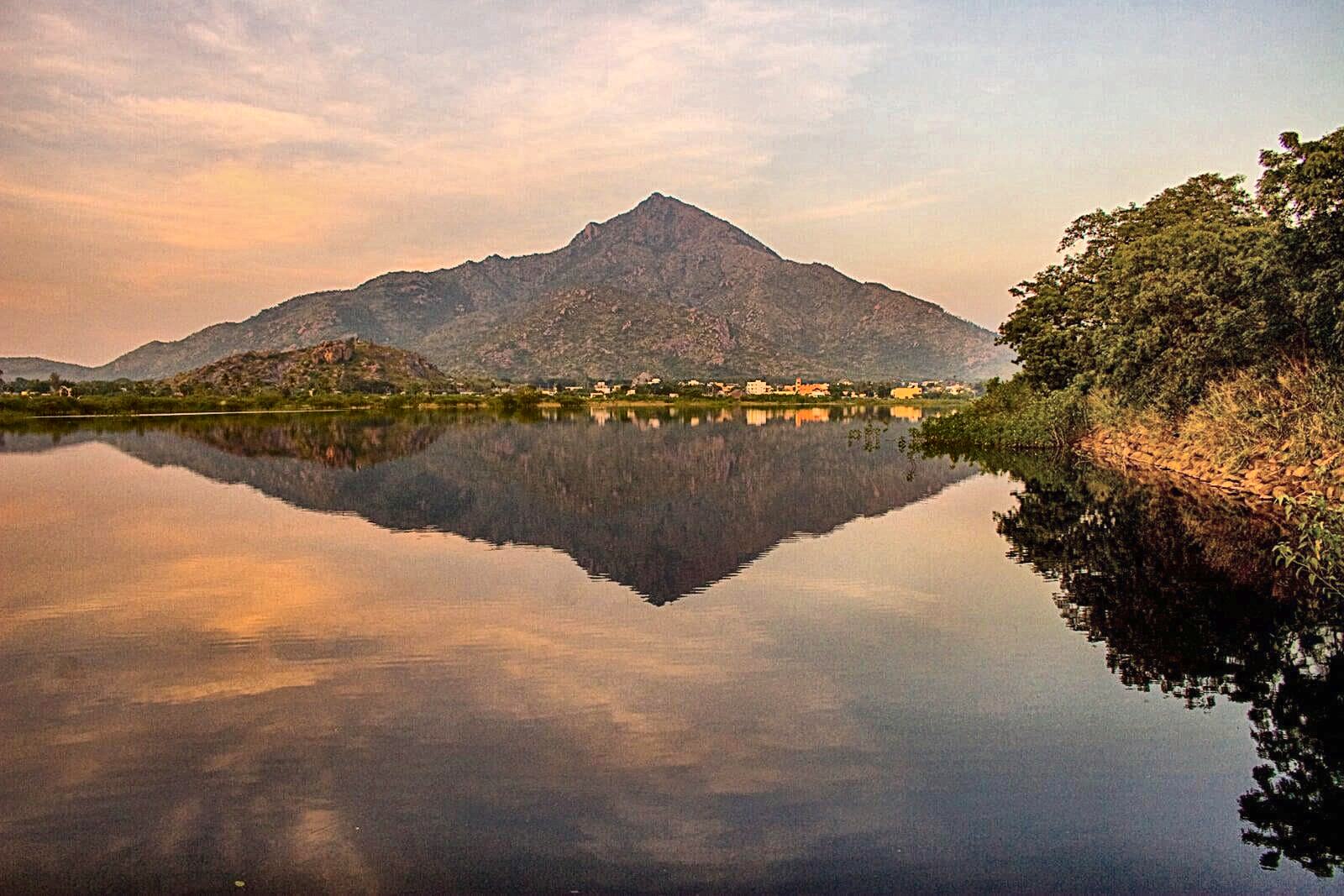
Arunachala · அருணாசலம்
The Sacred Mountaina column of fire, cooled into stone
To pilgrims it is Shiva himself. To geologists, some of the oldest rock on Earth. To the creatures of its slopes, home. This page is about the mountain we serve.
To pilgrims it is Shiva himself. To geologists, some of the oldest rock on Earth. To the creatures of its slopes, home. This page is about the mountain we serve.
The Skandapurana tells it this way. Brahma the creator and Vishnu the protector, caught in a quarrel over which of them was supreme, saw a column of blazing effulgence rise before them — without beginning, without end. A voice spoke: let whichever of you finds My limit be the greater.
Vishnu became a boar and dug down through the earth for an age; the column went deeper. Brahma became a swan and flew upward for years; the column rose beyond him. Both returned humbled, their pride dissolved — and in that dissolution, understood. At their prayer, the unbearable light cooled and condensed into an immovable form so that the world could approach it: the red hill, Arunachala.
The puranas add that Parvati herself performed penance on these slopes, that Durga's pool from the slaying of Mahishasura still stands at the Durgai Amman temple on the eastern side, and that here the Goddess merged with the Lord as Ardhanareeswara — the two made one.
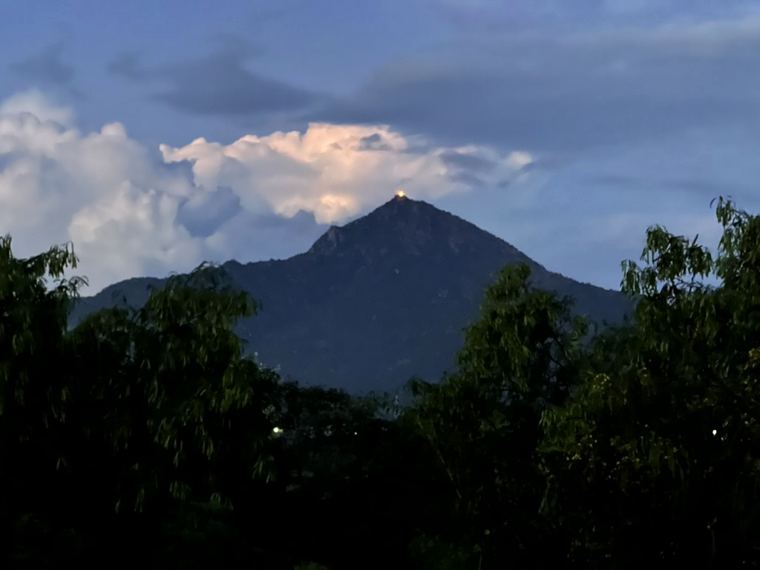
Once a year, on the full-moon evening of Karthigai when the Krithika star ascends, a flame is lit atop the peak — the Karthigai Deepam — and for a few nights the mountain wears its original form again: a hill of fire, visible for miles across the plain.
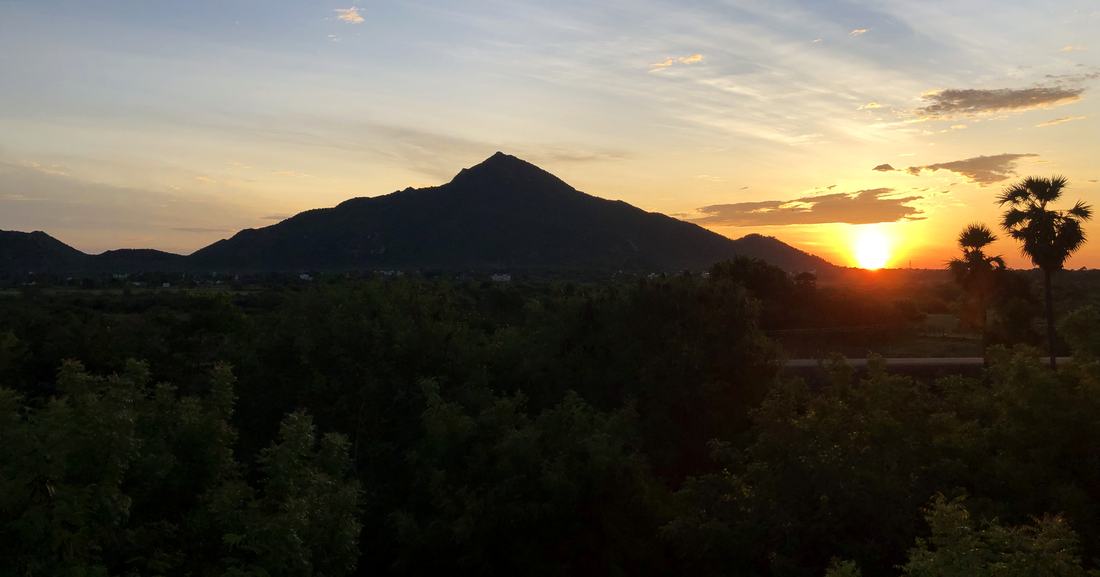
Few places on Earth carry a longer devotional literature. The child-saint Sambandar hailed the hill as wisdom itself taken form; Manickavachakar sang forty songs of it in the Thiruvachagam; Arunagirinathar poured eighty-seven songs of the Tiruppugazh at its feet. Adi Sankara composed his Arunachala Ashtakam here, and Ramalinga Adigalar — Vallalar — left his verses of light.
And in the last century, a sixteen-year-old boy arrived at this mountain and never left. Sri Ramana Maharshi lived on and beside Arunachala for over fifty years, and his Aksharamanamalai — the marital garland of letters — is sung around the hill to this day. For him the mountain was not a symbol of the Self. It was the Self.
From the rishis of the Vedic age — Agastya, Valmiki, Narada, Patanjali — to the Nayanmars, to seekers arriving today from every continent, the mountain has never lacked for those who love it.
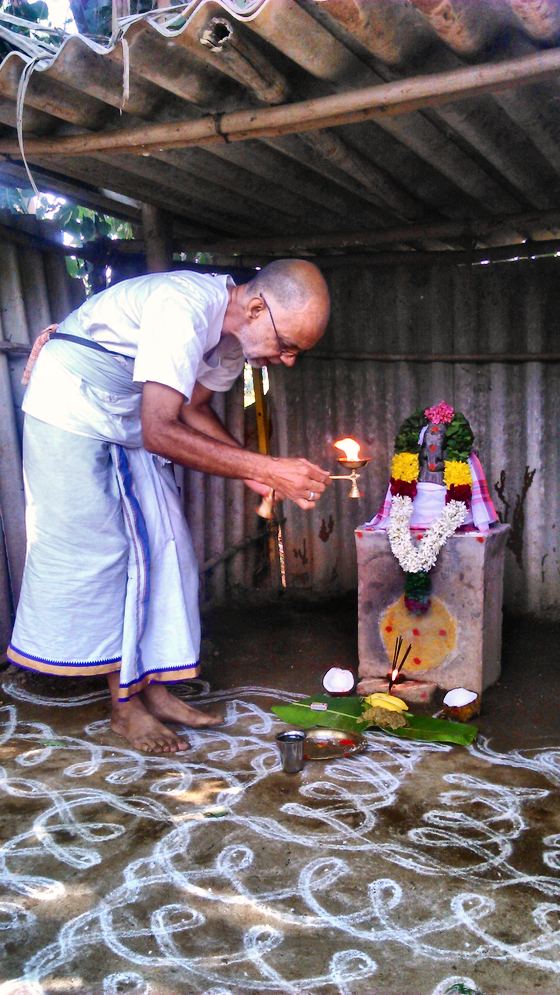
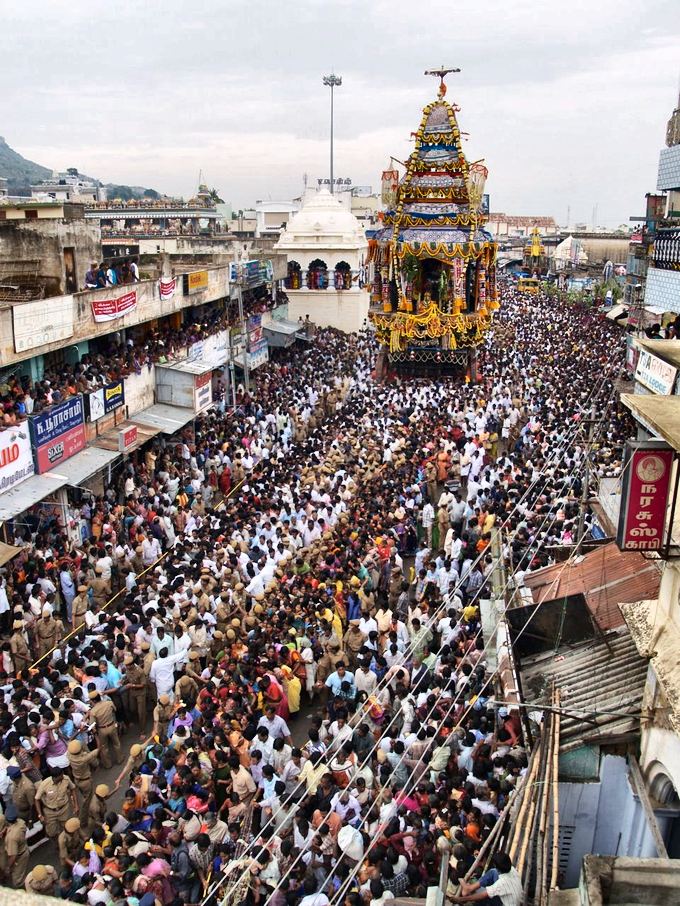
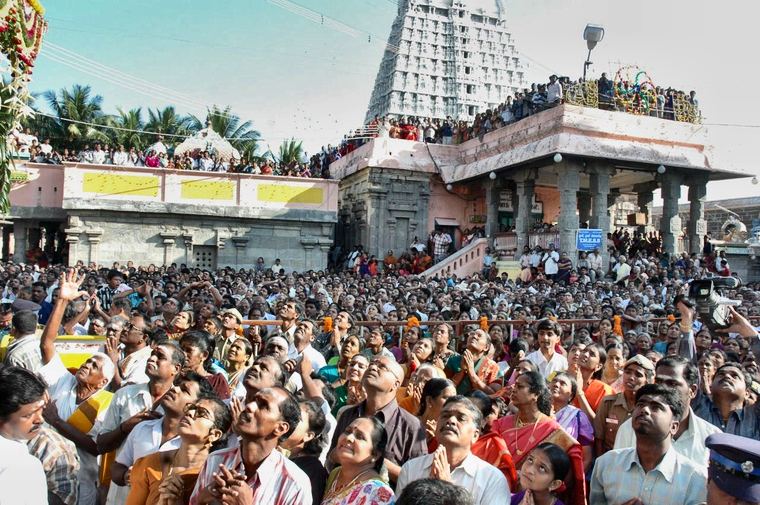
The oldest form of worship here needs no temple: you simply walk around the hill, keeping it on your right. On every full-moon night, lakhs of pilgrims make the 14-kilometre girivalam barefoot, passing the ashtalingams and the old shrines, the tanks and the trees.
The puranas promise that even this simple act — circumambulating the hill, or merely living near it with good intent — carries a person toward liberation. Whatever one's belief, to walk it on a full moon amid that quiet river of people is to understand why this mountain has been loved for so long.
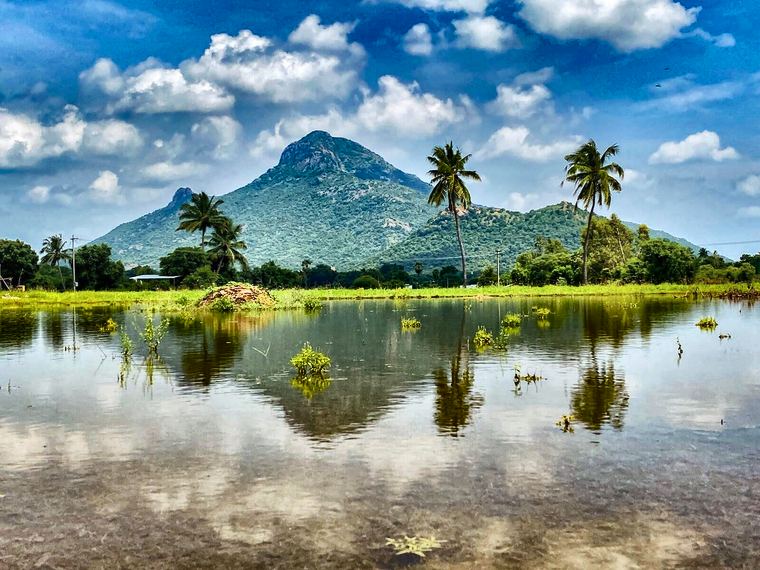
The scriptures say only the rain clouds can bathe Arunachala, only the trees on its slopes can offer it flowers. For most of the last century, those trees were gone — the hill stood scorched and bare. The mountain had been stripped of its own offerings.
That is what our work restores. Today over 227 species of birds are recorded in and around the hill. Spotted deer, pangolin, porcupine and civet have returned. Streams run for months after the rains, with fish in them. And on the slopes grow dozens of medicinal herbs known to traditional healers for centuries:
Every sapling planted on Arunachala is an offering that outlasts us all. Join the work, or sustain it.
Donate Get Involved